Tag: writing

  • One Week into 2026: When Life Doesn’t Explode—and That’s the Win

    One Week into 2026: When Life Doesn’t Explode—and That’s the Win

    A Quiet Start to 2026

    A week and ten days into 2026, work decided to test the waters—hard.
    There were moments that genuinely felt scary. One wrong update, one misplaced value, and the damage could’ve spiraled. It didn’t. What could have turned into a disaster ended with minimal collateral damage. Effort showed up. Experience held its ground.

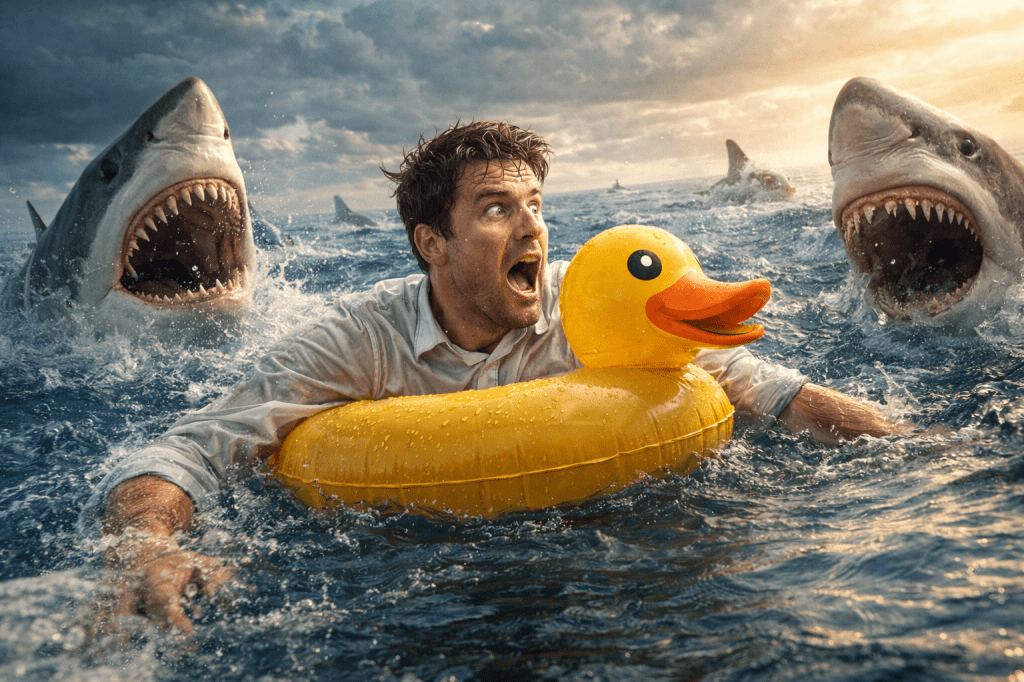
    This job is like trying to swim with sharks wearing a silly inflatable pool float. No delusions here! One little slip-up and instead of circling me like I’m some kind of fish, they’re chomping down like I’m a buffet special. But hey, days like these are a goofy reminder that precision, patience, and some serious prep work are the real lifesavers!

    Outside work, good habits have quietly returned.


    Cycling to the office is back on the table. Walking 10,000 steps a day? Retired—for now. Last year, my body chewed through that effort like a sugarcane press, with very little to show for it. This year needed a smarter approach, not louder discipline. So far—touch wood—it’s working.

    Reading has made a comeback too. The gym still lingers in the background like an unopened tab in the browser of my mind. I’ll get there.

    Home, though—that’s where real progress happened.
    Small steps over the last month have paid off. The space feels lighter now. Calmer. The balcony is finally clearing up, and the TV purchase feels like the final piece clicking into place. Happy space. Better energy.

    Sleep, on the other hand, has been… interesting.
    Dreams have taken unexpected detours—school friends on long-forgotten outings, and then a return to a house from 2004, where my career once found its footing. What’s strange isn’t the memory—it’s the precision. Layouts merging, old storerooms reappearing where they shouldn’t. It’s as if the mind is quietly reorganising timelines. Or maybe just reminding me where I’ve been.

    Moving to the new house has pleasantly adjusted this year’s budget, but the benefits are undeniably worth it—delicious home-cooked meals, less spontaneous travel, and the greatest advantage of all: precious time saved from traffic. Living close to work is a wonderful luxury that enhances our quality of life. It’s a fantastic upgrade cleverly hidden in the logistics!

    I feel better now.
    I’m more stable and less easily upset. I’m grateful for the people, routines, and unseen support that keeps pushing me forward when things could have gone wrong.

    Quiet progress still counts. Sometimes, it counts the most.

  • I Showed Up Every Time: A Quiet Goodbye to 2025

    I Showed Up Every Time: A Quiet Goodbye to 2025

    Subscribe to continue reading

    Subscribe to get access to the rest of this post and other subscriber-only content.

  • The Boat That Saved Me: Letting Go, Moving On, and the Journey Ahead

    The Boat That Saved Me: Letting Go, Moving On, and the Journey Ahead

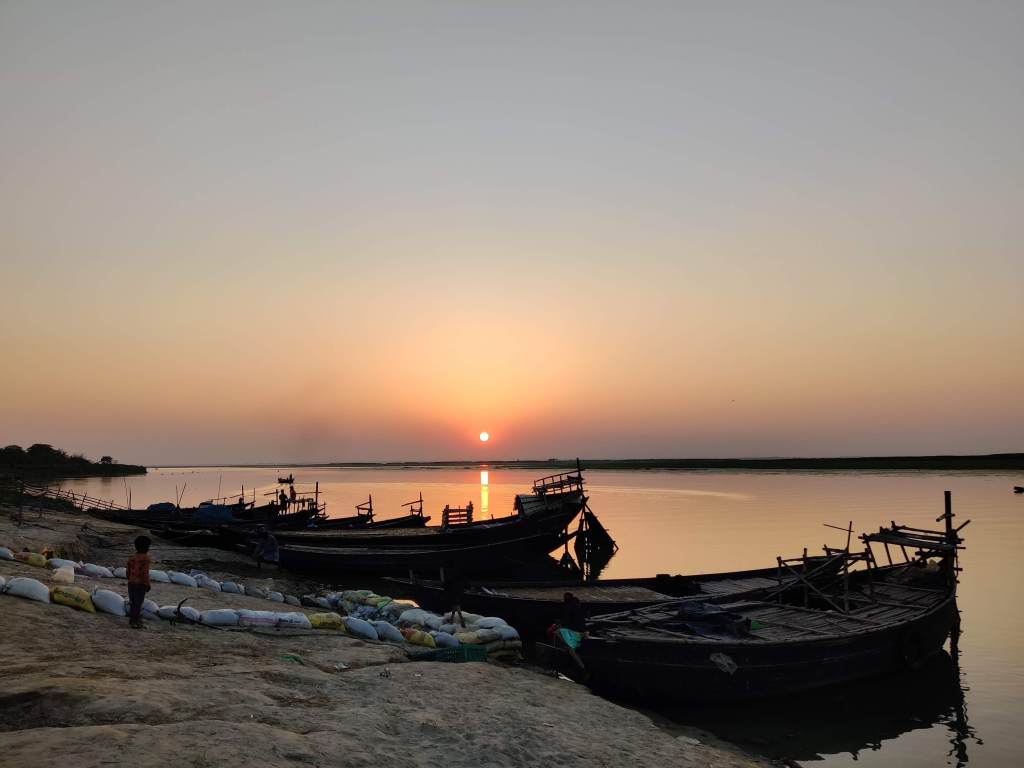
    I jumped into the river without knowing how deep it ran, or whether my swimming was good enough to save me. It wasn’t courage — it was desperation disguised as hope. And somewhere between panic and surrender, just when the river began to pull me under, a boat arrived. Not an old, weathered one… but a new one. Fresh wood. New fragrance. A promise.

    I didn’t step into it gracefully. I clung to it — breathless, shaken, grateful.

    That was three years ago.

    Since then, this little boat has carried me across storms I never imagined I would survive. In these three years I’ve watched friendships dissolve, witnessed death up close, and seen families crumble under tragedies that changed me forever. When someone you know is shot point-blank, when a friend you made future plans with suddenly disappears from this world — something shifts inside you. Your definition of life, purpose, even time… rewrites itself.

    But this boat, this home, this chapter — it held me.

    It sheltered a stranger in a new city. It absorbed my silent battles. It watched me break and rebuild, sometimes on the same day. It gave me the dignity of space and the safety of solitude. It placed me in the heart of the city—three railway stations, endless buses, malls five minutes away. Watching a movie simply meant stepping out of the door. Hosting friends felt effortless.

    It was a good life. A life that saved me.

    And now, on December 7, 2025, the river slows, and I must step off the very boat that once rescued me. Not because it failed me — but because the journey has changed.

    As I pack, memories are rushing back. Good energies remain here now, waiting for the next wanderer who needs a safe harbour.

    I don’t know what the future holds.
    But I know this—today, I stand at the riverbank, thankful for the voyage, for the storms that shaped me, and the boat that didn’t let me drown.

    New adventures await.
    And once again, I leap—
    this time not out of fear,
    but faith.

  • Sapiens

    Sapiens

    They say some books speak.
    This one didn’t.

    It whispered—in a tongue older than language. It challenged—like a quiet monk who knows you’ve lived too long in the noise.
    And in the final few pages, it laughed. Not a mocking laugh. But the laugh of something ancient, something that always knew it would outgrow you, like the forest reclaims a forgotten path.

    When Wheat Became the Master

    Page 90. I sat up straighter. I read it once. Twice. Then closed the book.

    What if the story we’ve always told—of humans domesticating wheat—was an illusion?
    What if it wasn’t we who tamed the crop, but the crop that tamed us?

    The wheat didn’t beg to be cultivated. But it learned to anchor us—into fields, into cycles, into sameness.
    From hunters to harvesters, we traded motion for permanence.
    The illusion of progress shackled us to the plough.

    Agriculture may have given us civilization, but it took away something too—wildness, curiosity, fluidity.

    And I wondered:
    What other masters wear masks of servitude?

    Our phones?
    Our ambitions?
    Our calendars?

    The Myth of Equality

    Between pages 122 to 124, I met a truth so sharp it bled through the paper.

    Equality is not nature’s virtue.
    Nature rewards adaptation, not fairness. Evolution doesn’t hand out participation trophies.
    It selects. It favors. It discards.

    Yet we’ve built a civilization that speaks the language of equality—loudly, beautifully.
    But listen more carefully, and you’ll hear the undertones of an ancient dialect: power still speaks louder in silence.

    We are born into hierarchies—in biology, in culture, in every room we walk into.

    To deny it is poetic. To recognize it is political.


    The Bee Has No Bar Council

    Ah, page 134. A balm. A bruise.

    In the hive, there are nurses, foragers, guards, and dancers. But no judges. No attorneys.
    Because bees do not lie. They do not cheat. They do not betray.

    They follow the unwritten architecture of instinct, a code older than scripture.
    And because trust is not broken, laws are not needed.

    Meanwhile, we, the “crown of creation,” drown in disclaimers, build skyscrapers of contracts to compensate for our collapsing truths.

    Perhaps evolution didn’t crown us.
    Perhaps it burdened us—with consciousness, with choice, with the capacity to fracture trust.

    Two Mushrooms, One World

    Page 136 offered a parable in disguise.

    Two mushrooms: identical in appearance. One nourishes. The other kills.
    Only context distinguishes poison from cure.

    It made me pause.
    Because isn’t that true of people too? Of ideas? Of emotions?

    What heals me may wound you.
    What feels like truth to one may be heresy to another.

    We often speak of “right” and “wrong” like absolutes.
    But the forest knows better. It whispers: It depends on the tree under which you grow.

    Binary Gods, Digital Demons

    Page 148. My pulse quickened.

    We built machines to serve us. With binary bones and silicon skin.
    We taught them logic. Structure. Precision.

    But now? They begin to imitate intuition. They pattern us. Predict us. Persuade us.

    We dreamt of AI as a tool. But it may become a mirror—one that does not flatter, only reflects.
    And what if the mirror starts dreaming too?

    Will it see us as creators?
    Or as quaint relics—the clay before the code?

    The Matrix, it seems, was not fiction. It was foreshadowing.

    Gender: Script or Sentence?

    XY and XX—mere biological scaffolding.

    But gender? That’s theatre.
    Our cultures assign roles before we learn to walk. Blue for strength. Pink for softness.
    And before we know it, we are performing—a script neither authored nor questioned.

    This wasn’t a book passage. It was a backstage pass to humanity’s longest-running play.
    And I’m still not sure if we’re the actors… or the audience.

    The Battle That Lost but Lived

    Page 211 told the tale of Numantia—razed by Rome, starved into surrender.

    But what Rome destroyed in body, Spain resurrected in myth.
    The Numantians became more than a memory. They became a metaphor—of resistance, of defiance, of dignity in defeat.

    Isn’t that what we all want?

    To live a life that becomes story.
    Not for applause, but for meaning.

    Buddha vs. God: An Unsent Letter

    The monotheist asks: What does God want from me?
    The Buddhist asks: What do I do with this suffering?

    Page 253 whispered what most philosophies shout:
    There is no savior coming. No divine bailout.

    The problem is craving. The solution is clarity.
    And the journey? Yours alone.

    No temples. No miracles. Just quiet courage in the face of chaos.

    Final Margins

    This was not a self-help book.
    It was a philosophical ambush.
    A quiet grenade lobbed into the comfort of my certainty.

    What did it teach me?

    That mushrooms lie.
    That bees live without betrayal.
    That wheat enslaves with sweetness.
    That AI may become prophecy.
    That suffering is not a punishment, but a practice.
    And that the self… is the only thing truly worth liberating.