Blog

  • The Quiet Toll of Going All In

    The Quiet Toll of Going All In

    Since my last blog, something changed. On paper, life looks productive. Client meetings. Deck preparations. Strategy discussions. Exposure. Growth.

    But, In reality – it took a toll.

    I went hard. Harder than I probably needed to. And somewhere between back-to-back meetings and late-night revisions, my body tapped me on the shoulder — fever, cold, exhaustion. Nothing dramatic. Just enough to remind me I’m human.

    I had just started getting back into the gym rhythm. And then — pause. Again. It’s funny how discipline returns at it’s own pace… and excuses return louder.


    The Digital Noise

    I used to start my days with MFM and The Daily Brief. Sharp inputs. Clear thinking. Off late I miss it.

    Not because I didn’t have time — but because digital overload has a way of numbing curiosity. My mind is resisting going the extra mile.

    And then the subtle excuses creep in:
    “Tomorrow.”
    “After this week.”
    “Once things settle.”

    They never fully settle.


    The Trade-Off I’m Learning to Accept

    Sometimes I wonder… Should I have gone this hard from day one at my current organization?
    Maybe. But that would have cost me something else — exposure, networks, IIM rooms I once only dreamed off.
    And I’ve made peace with the fact that , Energy never disappears. It compounds.
    All the effort. All the grind. All the silent nights.
    It will return. Tenfold.

    Not necessarily as applause — but as leverage.


    Small Escapes Matter

    On a lighter note — wrapped up Stranger Things. What a show. The pacing. The transitions. The closure . Proper storytelling. It felt good to lose myself in something crafted with that much intent.

    We’ve been wanting to catch a movie in theatres too. But logistics and “Nothing worth watching” has rendered our decisions.

    Funny how accessibility shapes behavior.In our previous home, a theatre was five minutes away. Now it feels like a task.


    The Bigger Undercurrent

    Beneath all this routine — something is brewing. This week, I have an important meeting. Not just another meeting. One that could quietly tilt my career toward a different arc.

    Even writing that feels surreal. There was a version of me that thought this was not possible at all.

    Now? It’s on the table. Fingers crossed — yes.


    Where I Stand

    Life is moving at a pace I once couldn’t imagine. Faster. Heavier. Fuller. But I’m in a better space.

    Habits are finding their way back.There’s still a lot of work. But this time, I’m not chasing everything. I pause , access and choose . Interesting times ahead. I’m ready.

  • Just another Sunday !

    The world was moving at its own pace . A laid back Sunday was on the cards. Woke up to the chirping of birds and wandered off to grab some nice Biriyani for lunch.

    What followed was a casual shopping for footwears and just as we were getting started , I received a call .

    Not a regular catch-up, as the timing was off. It was my dad. Now for those who know less, my dad runs by the clock. So anything off the charts actually makes me wonder why?

    After the usual questions about my whereabouts, I received the news about my aunt, the only one I caught up with weekly and stayed with when we visited Trivandrum. Thoughts flooded my mind like a dam bursting. But she was only 51 years old; it couldn’t be that serious, I reassured myself.

    Dad’s voice, “she met with a minor accident.” He sounded light, not that his voice was shallow or showed any remorse. I can’t really blame him as he was only exposed to what was said to him. We took a pause, slowly thinking it might have been a bike.

    As the call end button was pushed, I looked up at my spouse and said, “That road is dangerous.”
    She – “Should we call your cousins?”
    Me – “They will be in a state of panic. Should we disturb them now?”

    My mind completely blind. The connection between my brain and reason felt… severed.

    She – “No .. But … “
    Me – “Let’s pause and then take a call”

    We headed to Lalbhag garden, and just as we paid for the car parking and the entrance, there came a second call.

    I took the phone, saw who actually called me, and then I froze for a few seconds. I told my wife, “Not good,” and slowly pushed the options on the screen to attend the call.

    Dad – ” She has left us behind”

    She was carrying lunch to her loved ones on the safest side of the road , from the front a WagonR came hurtling in, out of control. It hit a pipe , hit her , and then crashed into a wall. She did not bleed , but head injuries don’t ask for permission.

    This was the fourth person close to me to leave in the last three years. We sat there, empty, thinking about her family, about to be swallowed by chaos.

    What was meant to be another Sunday, ended as something else entirely.

  • One Week into 2026: When Life Doesn’t Explode—and That’s the Win

    One Week into 2026: When Life Doesn’t Explode—and That’s the Win

    A Quiet Start to 2026

    A week and ten days into 2026, work decided to test the waters—hard.
    There were moments that genuinely felt scary. One wrong update, one misplaced value, and the damage could’ve spiraled. It didn’t. What could have turned into a disaster ended with minimal collateral damage. Effort showed up. Experience held its ground.

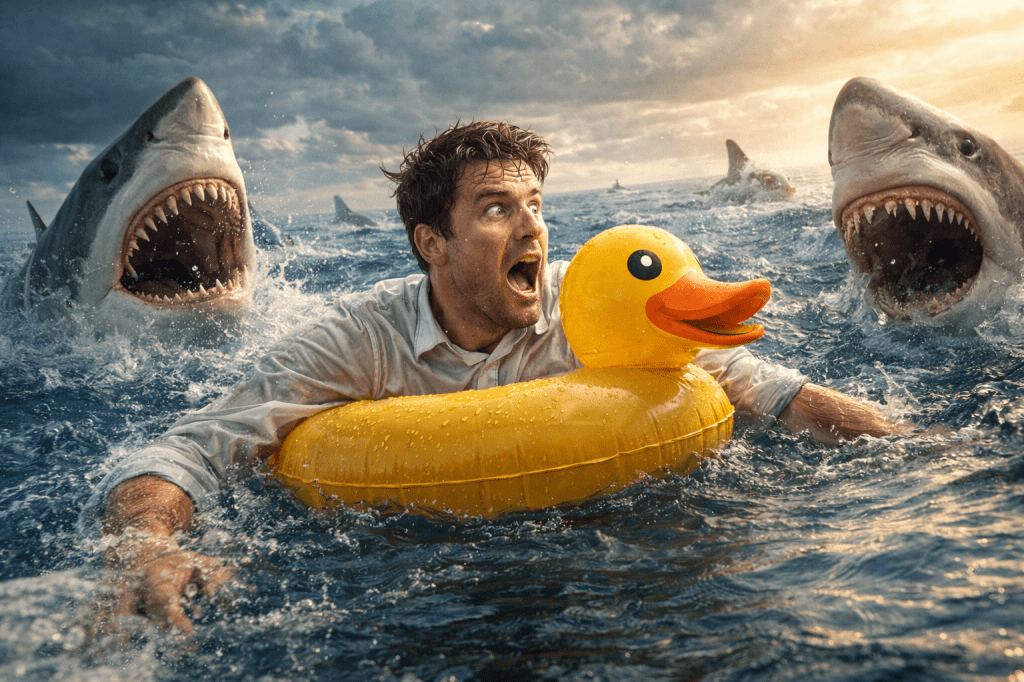
    This job is like trying to swim with sharks wearing a silly inflatable pool float. No delusions here! One little slip-up and instead of circling me like I’m some kind of fish, they’re chomping down like I’m a buffet special. But hey, days like these are a goofy reminder that precision, patience, and some serious prep work are the real lifesavers!

    Outside work, good habits have quietly returned.


    Cycling to the office is back on the table. Walking 10,000 steps a day? Retired—for now. Last year, my body chewed through that effort like a sugarcane press, with very little to show for it. This year needed a smarter approach, not louder discipline. So far—touch wood—it’s working.

    Reading has made a comeback too. The gym still lingers in the background like an unopened tab in the browser of my mind. I’ll get there.

    Home, though—that’s where real progress happened.
    Small steps over the last month have paid off. The space feels lighter now. Calmer. The balcony is finally clearing up, and the TV purchase feels like the final piece clicking into place. Happy space. Better energy.

    Sleep, on the other hand, has been… interesting.
    Dreams have taken unexpected detours—school friends on long-forgotten outings, and then a return to a house from 2004, where my career once found its footing. What’s strange isn’t the memory—it’s the precision. Layouts merging, old storerooms reappearing where they shouldn’t. It’s as if the mind is quietly reorganising timelines. Or maybe just reminding me where I’ve been.

    Moving to the new house has pleasantly adjusted this year’s budget, but the benefits are undeniably worth it—delicious home-cooked meals, less spontaneous travel, and the greatest advantage of all: precious time saved from traffic. Living close to work is a wonderful luxury that enhances our quality of life. It’s a fantastic upgrade cleverly hidden in the logistics!

    I feel better now.
    I’m more stable and less easily upset. I’m grateful for the people, routines, and unseen support that keeps pushing me forward when things could have gone wrong.

    Quiet progress still counts. Sometimes, it counts the most.

  • I Showed Up Every Time: A Quiet Goodbye to 2025

    I Showed Up Every Time: A Quiet Goodbye to 2025

    Subscribe to continue reading

    Subscribe to get access to the rest of this post and other subscriber-only content.

  • The Boat That Saved Me: Letting Go, Moving On, and the Journey Ahead

    The Boat That Saved Me: Letting Go, Moving On, and the Journey Ahead

    I jumped into the river without knowing how deep it ran, or whether my swimming was good enough to save me. It wasn’t courage — it was desperation disguised as hope. And somewhere between panic and surrender, just when the river began to pull me under, a boat arrived. Not an old, weathered one… but a new one. Fresh wood. New fragrance. A promise.

    I didn’t step into it gracefully. I clung to it — breathless, shaken, grateful.

    That was three years ago.

    Since then, this little boat has carried me across storms I never imagined I would survive. In these three years I’ve watched friendships dissolve, witnessed death up close, and seen families crumble under tragedies that changed me forever. When someone you know is shot point-blank, when a friend you made future plans with suddenly disappears from this world — something shifts inside you. Your definition of life, purpose, even time… rewrites itself.

    But this boat, this home, this chapter — it held me.

    It sheltered a stranger in a new city. It absorbed my silent battles. It watched me break and rebuild, sometimes on the same day. It gave me the dignity of space and the safety of solitude. It placed me in the heart of the city—three railway stations, endless buses, malls five minutes away. Watching a movie simply meant stepping out of the door. Hosting friends felt effortless.

    It was a good life. A life that saved me.

    And now, on December 7, 2025, the river slows, and I must step off the very boat that once rescued me. Not because it failed me — but because the journey has changed.

    As I pack, memories are rushing back. Good energies remain here now, waiting for the next wanderer who needs a safe harbour.

    I don’t know what the future holds.
    But I know this—today, I stand at the riverbank, thankful for the voyage, for the storms that shaped me, and the boat that didn’t let me drown.

    New adventures await.
    And once again, I leap—
    this time not out of fear,
    but faith.

  • Reversi : A Journey Through Time and Choices

    Reversi : A Journey Through Time and Choices

    Last night, I took a detour from my usual watchlist. Not typically a fan of Korean cinema, I decided to shake off the monotony and hit play on Reversi, a slow, time-loop drama I had heard whispers about.

    And wow. What I thought would be just another film turned into a full-blown emotional avalanche.

    By the end, I sat there—quiet, heavy-hearted, overwhelmed. Not by any dramatic twist or tearjerker climax, but by something far deeper: regret… and gratitude.

    How many times have we looked back and thought:

    • “I wish I had bought that bike earlier.”
    • “If only I had invested more in that stock.”
    • “I should’ve worked harder.”
    • “Why didn’t I take that leap of faith?”

    The endless “if onlys” and “what ifs”—they pile up silently over time like unopened letters, each one carrying a weight we didn’t sign up for.

    How many “if” moments do you carry?
    How many regrets are quietly living rent-free in your mind?
    But here’s a tougher one:
    How many times have you truly celebrated the choices you did make?

    Reversi dives into that emotional battlefield. It reminded me of another gem—Oh My Kadavule—which beautifully explored the same truth: Time is the most valuable currency we own.


    And here’s what I’ve come to realize:

    • Whatever your life looks like right now—it’s unfolding at its own perfect pace.
    • The roof over your head, the hands that help, the meals on your table, the bike you ride, the people you love—they are not accidents.
    • They are your timeline. Your story. Your truth.

    We often fantasize about an alternate reality. But the truth is: You’re already living the best version of your life.
    Not because it’s perfect. But because it’s yours.

    So, to the one still haunted by the “could haves” and “should haves”…

    Pause. Breathe. Look around.
    You have more than you think.
    You are more than you think.

    Reversi is not a movie for the faint-hearted. But it’s a quiet masterpiece. One that nudges you—gently, yet powerfully—to appreciate the now.

    Because sometimes, the only thing we really need… is perspective.

    Adios, amigos. Until next time—choose today. Love now. Regret less.

  • Nothing Urgent, Everything Important.

    Nothing Urgent, Everything Important.

    -One minute, infinite thoughts.

    What new can I do today?
    What progress am I making?
    What is it that I overthink about?
    Why should I skip gym today?
    How can I be a couch potato with purpose?

    Usually, these questions chase me the moment I open my eyes. But not today. Today, they can hit pause.

    Instead, I enjoyed the warm sunshine, stayed still, let the breeze do the talking, and for once, let myself just be. I thought of every person who has shaped me — parents, siblings, family, friends, even fleeting strangers. I played their names on loop in my mind, silently thanking them for the lessons, laughter, and moments that stitched me into who I am today.

    I don’t know what the future holds, but I know this — come what may, I’ll grind through it. No time to look back usually, but today, I will — to smile at the path I’ve walked and the person I’ve become.

    As I take a slow sip of my favourite coffee, there’s one thing I can’t help but notice:

    Some days are just meant to be soft celebrations in disguise.

    — Inspired by Shaan Puri ‘s OMB (One Minute Blog). Personal. Raw. Real.

  • Sapiens

    Sapiens

    They say some books speak.
    This one didn’t.

    It whispered—in a tongue older than language. It challenged—like a quiet monk who knows you’ve lived too long in the noise.
    And in the final few pages, it laughed. Not a mocking laugh. But the laugh of something ancient, something that always knew it would outgrow you, like the forest reclaims a forgotten path.

    When Wheat Became the Master

    Page 90. I sat up straighter. I read it once. Twice. Then closed the book.

    What if the story we’ve always told—of humans domesticating wheat—was an illusion?
    What if it wasn’t we who tamed the crop, but the crop that tamed us?

    The wheat didn’t beg to be cultivated. But it learned to anchor us—into fields, into cycles, into sameness.
    From hunters to harvesters, we traded motion for permanence.
    The illusion of progress shackled us to the plough.

    Agriculture may have given us civilization, but it took away something too—wildness, curiosity, fluidity.

    And I wondered:
    What other masters wear masks of servitude?

    Our phones?
    Our ambitions?
    Our calendars?

    The Myth of Equality

    Between pages 122 to 124, I met a truth so sharp it bled through the paper.

    Equality is not nature’s virtue.
    Nature rewards adaptation, not fairness. Evolution doesn’t hand out participation trophies.
    It selects. It favors. It discards.

    Yet we’ve built a civilization that speaks the language of equality—loudly, beautifully.
    But listen more carefully, and you’ll hear the undertones of an ancient dialect: power still speaks louder in silence.

    We are born into hierarchies—in biology, in culture, in every room we walk into.

    To deny it is poetic. To recognize it is political.


    The Bee Has No Bar Council

    Ah, page 134. A balm. A bruise.

    In the hive, there are nurses, foragers, guards, and dancers. But no judges. No attorneys.
    Because bees do not lie. They do not cheat. They do not betray.

    They follow the unwritten architecture of instinct, a code older than scripture.
    And because trust is not broken, laws are not needed.

    Meanwhile, we, the “crown of creation,” drown in disclaimers, build skyscrapers of contracts to compensate for our collapsing truths.

    Perhaps evolution didn’t crown us.
    Perhaps it burdened us—with consciousness, with choice, with the capacity to fracture trust.

    Two Mushrooms, One World

    Page 136 offered a parable in disguise.

    Two mushrooms: identical in appearance. One nourishes. The other kills.
    Only context distinguishes poison from cure.

    It made me pause.
    Because isn’t that true of people too? Of ideas? Of emotions?

    What heals me may wound you.
    What feels like truth to one may be heresy to another.

    We often speak of “right” and “wrong” like absolutes.
    But the forest knows better. It whispers: It depends on the tree under which you grow.

    Binary Gods, Digital Demons

    Page 148. My pulse quickened.

    We built machines to serve us. With binary bones and silicon skin.
    We taught them logic. Structure. Precision.

    But now? They begin to imitate intuition. They pattern us. Predict us. Persuade us.

    We dreamt of AI as a tool. But it may become a mirror—one that does not flatter, only reflects.
    And what if the mirror starts dreaming too?

    Will it see us as creators?
    Or as quaint relics—the clay before the code?

    The Matrix, it seems, was not fiction. It was foreshadowing.

    Gender: Script or Sentence?

    XY and XX—mere biological scaffolding.

    But gender? That’s theatre.
    Our cultures assign roles before we learn to walk. Blue for strength. Pink for softness.
    And before we know it, we are performing—a script neither authored nor questioned.

    This wasn’t a book passage. It was a backstage pass to humanity’s longest-running play.
    And I’m still not sure if we’re the actors… or the audience.

    The Battle That Lost but Lived

    Page 211 told the tale of Numantia—razed by Rome, starved into surrender.

    But what Rome destroyed in body, Spain resurrected in myth.
    The Numantians became more than a memory. They became a metaphor—of resistance, of defiance, of dignity in defeat.

    Isn’t that what we all want?

    To live a life that becomes story.
    Not for applause, but for meaning.

    Buddha vs. God: An Unsent Letter

    The monotheist asks: What does God want from me?
    The Buddhist asks: What do I do with this suffering?

    Page 253 whispered what most philosophies shout:
    There is no savior coming. No divine bailout.

    The problem is craving. The solution is clarity.
    And the journey? Yours alone.

    No temples. No miracles. Just quiet courage in the face of chaos.

    Final Margins

    This was not a self-help book.
    It was a philosophical ambush.
    A quiet grenade lobbed into the comfort of my certainty.

    What did it teach me?

    That mushrooms lie.
    That bees live without betrayal.
    That wheat enslaves with sweetness.
    That AI may become prophecy.
    That suffering is not a punishment, but a practice.
    And that the self… is the only thing truly worth liberating.

  • The Hidden Forces Shaping Our Decisions: A Simple Guide to Cognitive Biases

    The Hidden Forces Shaping Our Decisions: A Simple Guide to Cognitive Biases

    Imagine this: You’re Keanu Reeves, standing in that dimly lit room with Morpheus, the mysterious guide who holds the key to the truth. On one hand, he offers you a blue pill—a chance to go back to the comfort of what you know. In the other, a red pill—an invitation to see the world as it truly is, no matter how unsettling.

    This moment is more than just a choice between two pills; it’s a profound test of your mind’s ability to confront reality without the cloud of biases.

    You hesitate. The blue pill promises familiarity, a world where everything stays as you believe it to be. It’s the easy way out. Taking it would let you stick to what you already know, just like when your mind zeroes in on information that confirms your beliefs, ignoring anything that might contradict them. This is confirmation bias at play. It’s the comfort zone of your mind, where challenging your views feels unnecessary, maybe even dangerous.

    But what about the red pill? This is where things get tricky. Your mind starts to flood with memories of the life you’ve lived—the people, the places, the experiences. It’s almost as if these memories are shouting, “Stay with what you know!” This is availability bias whispering in your ear. Your brain is clinging to the most accessible information, making you lean toward the safer choice because it’s familiar.

    almost as if these memories are shouting, “Stay with what you know!” This is availability bias whispering in your ear. Your brain is clinging to the most accessible information, making you lean toward the safer choice because it’s familiar.

    Yet, standing there as Keanu Reeves, you realize this moment is bigger than just a pill. It’s about your ability to see beyond illusions and confront the truth even when it’s uncomfortable. This is where the red pill transforms into a symbol of breaking free from cognitive biases—those shortcuts your brain takes to make decisions quickly, often at the cost of seeing the full picture.

    As a leader, you face red pill/blue pill decisions every day. Do you stick with the status quo, guided by familiar metrics and comfortable routines? Or do you challenge your team, your strategy, and even your own beliefs to discover new possibilities?

    Many leaders, like the character faced with the blue pill, fall into the trap of confirmation bias. They surround themselves with yes-men and only seek out information that reinforces their current strategy. This can lead to a dangerous echo chamber, where dissenting voices are silenced, and innovation is stifled.

    Then there’s availability bias—where leaders rely heavily on recent successes or failures to make decisions. This bias can blind them to long-term trends or new opportunities because they’re too focused on what’s immediately in front of them.

    But great leadership is about taking the red pill. It’s about being willing to see the world as it is, not as you wish it to be. It’s about recognizing your own biases and actively seeking out diverse perspectives, even when they challenge your beliefs. The leaders who excel are the ones who understand that their greatest asset isn’t just their experience or intuition, but their ability to adapt, learn, and grow.

    So, as you stand in your own version of that iconic Matrix scene, ask yourself: Will you take the blue pill and stick to what you know, letting biases dictate your decisions? Or will you take the red pill, confront the truth, and lead with clarity, insight, and vision?

    The choice is yours.

  • The Hidden Flaw in Our Decisions: Why Your Brain Could Be Tricking You Right Now

    The Hidden Flaw in Our Decisions: Why Your Brain Could Be Tricking You Right Now

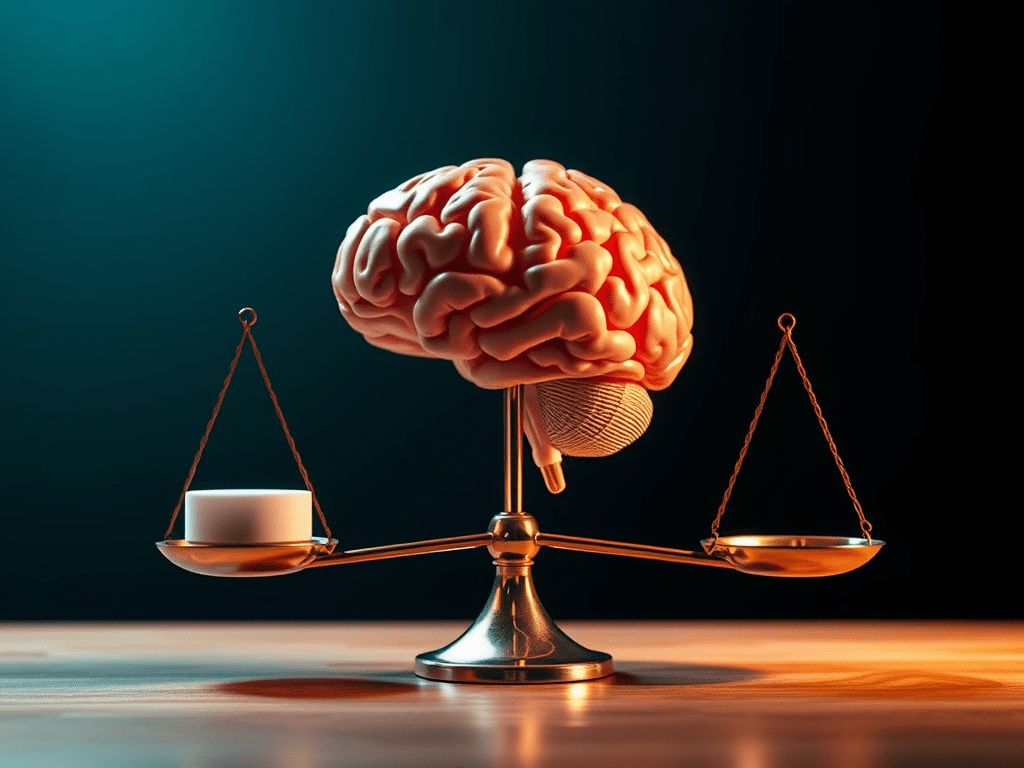
    What if I told you that a simple flip of words could drastically change your decisions—even when the facts remain the same? It sounds like something out of a psychological thriller, but this mind-bending twist is rooted in science, and it could be happening to you every day.

    In a classic experiment at Stanford, cancer doctors were asked to choose an operation for terminally ill patients. When the procedure was described as having a 90% chance of survival, 82% of the doctors chose it. But when the same procedure was framed with a 10% chance of dying, only 54% selected it. The numbers were identical, yet the choice dramatically shifted based on how the information was presented.

    This experiment reveals a powerful cognitive bias known as the illusion of explanatory depth—the tendency to believe we understand more than we actually do. It’s closely tied to confirmation bias, where we embrace information that supports our beliefs and reject what contradicts them. Together, these biases can lead us—and even experts like doctors—to make irrational decisions.

    Imagine this scenario in your everyday life: You’re choosing between two job offers. One is framed as offering a 90% chance of success, while the other is described with a 10% chance of failure. Even though the opportunities are mathematically the same, your brain is likely to favor the one with the positive framing.

    But here’s the kicker—this bias isn’t just about numbers. It’s about how our minds process information and the subtle ways our perceptions can be influenced without us even realizing it. If this happens to doctors making life-and-death decisions, what does it mean for the rest of us?

    Leadership and Decision-Making: The Silent Saboteurs

    As leaders, understanding these biases is crucial. Overconfidence and the illusion of explanatory depth can cloud judgment, leading to decisions that feel right but may be fundamentally flawed. The best leaders recognize this trap and actively seek out diverse perspectives, question their assumptions, and resist the seductive pull of confirmation bias.

    The next time you’re faced with a critical decision, take a moment to ask yourself: Are you choosing based on the facts, or is your brain playing tricks on you?

    #CognitiveBias #DecisionMaking #Leadership #Psychology #StanfordExperiment #ConfirmationBias #IllusionOfKnowledge

Riejesh

Stories That Stay, Words That Flow

Skip to content ↓